
Stop Heating the Whole Room: A Smarter Way to Handle Vacuum Chambers
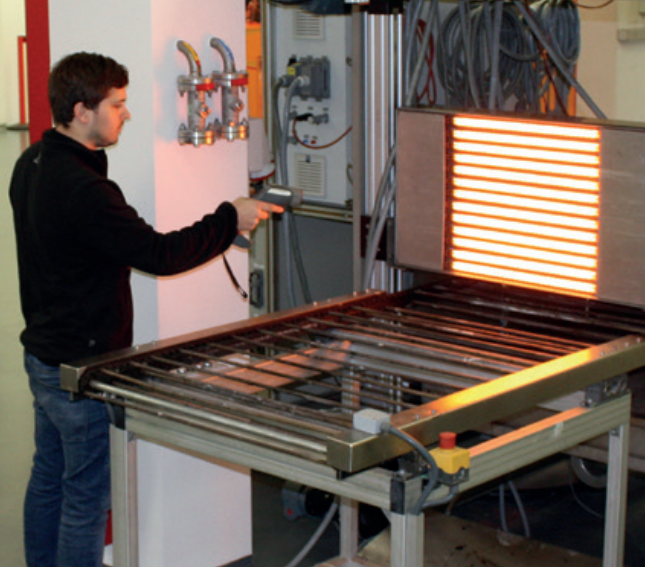
If you’re trying to cut your carbon footprint in semi-fab, you’ve got to stop relying on those clunky resistive heaters. They’re just inefficient. We’ve found a better way: vacuum-compatible infrared (IR) heater systems. Instead of trying to heat up the entire chamber volume—which is a massive waste of energy—we just aim the heat exactly where it needs to go: the wafer or the substrate. It saves power, and it gets you up to temperature way faster.
The Reality of Heat in a Vacuum
Here’s the thing about vacuum environments: convection is totally gone. You’re relying on radiation for everything. We use IR lamps with shortened wavelengths. Why? Because we want the energy to actually hit the target, not just soak into the chamber walls. By tuning that spectral output, we keep the heat concentrated on the wafer surface. It’s a simple tweak, but it seriously drops the kilowatt-hours you’re burning per cycle.
The Hardware (And Where Things Get Tricky)
We usually go with high-watt-density quartz lamps for these setups. We use high-voltage configurations so we can push more power through thinner filaments. This keeps the heater footprint small and out of the way. But you have to be careful. If you cram 2000W into a tiny array to hit your target temps faster, your cooling jackets need to be up to the task. They have to handle all that reflected heat. If your cooling loop dips or fails, you’re looking at burnt-out lamp ends or warped mounting brackets. Not a fun day at the office.
Making it Work in Your Factory
Switching to IR gets rid of that long, wasteful “warm-up” period you get with traditional furnaces. These lamps hit operating temp in seconds. You’ll see the electricity usage per wafer start drop almost immediately. Wiring these into your existing PLC is pretty easy. Just make sure your power supply can handle the initial inrush current. For the engineers chasing those “Green Factory” goals, it’s not really about swapping one part for another. It’s about reducing the thermal mass you’re fighting against. Less mass to heat means less carbon in the air. Simple as that.