Why we use Infrared for Smart Fab Thermal Management
If you’re planning a Smart Fab, you’ve probably realized that the old way of heating things—blowing hot air around—just doesn’t cut it anymore. Especially in a clean room. Here’s the thing: in a clean environment, moving air is your worst enemy. It kicks up dust, stirs up particles, and creates a mess you can’t afford. That’s why we lean on infrared (IR). Instead of heating the air, IR sends energy straight to the substrate using electromagnetic waves. No fans, no forced air, and way less risk of contamination. It’s cleaner. Period.
Getting the data right
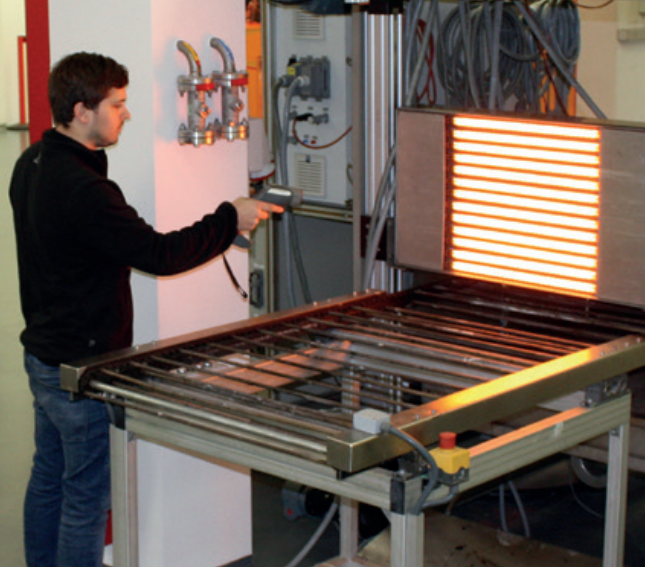
A Smart Fab is only as smart as the data coming out of it. We make sure our IR systems plug right into your PLC loops without a fight. With fast sensors and PID controllers, you can tweak the power in milliseconds. It means your heat stays rock-solid, even if you crank up the production speed. We can even use digital twins to map out exactly how the heat hits a wafer or panel. You’ll know exactly how much power you need before you even plug in the first lamp. It saves a lot of guesswork.
The trade-off: Heat vs. Space
Now, there is a catch. High-wattage IR lamps are great for rapid drying or curing because they pack a punch. But all that energy in a small space creates a lot of ambient heat. If you don’t plan for the “bounce-back,” you might find your electronics overheating or, worse, your machine frame starting to warp. My advice? Do the math on your total thermal load. Make sure your exhaust system can actually push that heat out of the room, or you’re just building an expensive oven.
Keeping things moving
Nobody wants to tear down a whole production line just because one lamp burned out. That’s a nightmare. We build these systems to be modular. We use standardized connectors and rails so your techs can just slide an old element out and pop a new one in. No need to spend hours recalibrating the entire array. You swap the part, flip the switch, and get back to work. It keeps the downtime low and your stress levels even lower.