
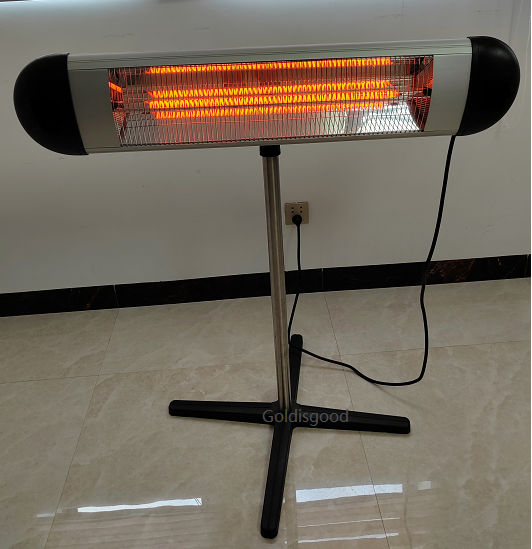
Stop Tearing Apart Your Heaters Just to Fix a Tube
Here’s the problem with most splash-proof heaters: they’re built like vaults. Sure, an IPX4 rating is great for keeping water out, but it usually means the whole thing is sealed shut. When a heating element finally gives out after a few years of hard work, you can’t just swap it. You have to strip the entire housing down to the bones. It’s a nightmare. We got tired of that, so we did things differently.
The “Sealed Unit” Headache
Usually, to get that water resistance, manufacturers bury the heating tubes deep inside the chassis under a mountain of gaskets. It works for protection, but it’s a disaster for maintenance. We decided to split the difference. We kept the protective shell, but we decoupled it from the heating core.
Just Slide It Out
We went with a “drop-in” design. Think of the infrared modules like cartridges—they just slide into a fixed frame. The best part? You don’t have to mess with the main control panel or break the IPX4 seal just to replace a tube. If one fails, you just pull the module, unplug the quick-connect terminals, and slide a new one in. What used to take hours now takes a few minutes. If you’re running a high-traffic line, you know that a five-minute swap is the difference between a normal day and a total production meltdown.
The Trade-off (Keeping it Real)
Now, look—modular isn’t magic. More connection points mean you have to be a bit more mindful. You can’t just jam things in. You have to make sure the contact pins are clean and seated perfectly. If a connection is loose in a high-wattage circuit, you’ll get a hot spot. We used heavy-duty terminals to help prevent this, but you still need to torque them to spec. No shortcuts here. We built this for the engineers who care more about uptime than how “simple” the initial assembly was. You get the splash protection you need, without the weekend-ruining maintenance.