Getting More Heat Into Your CNT Fabrication
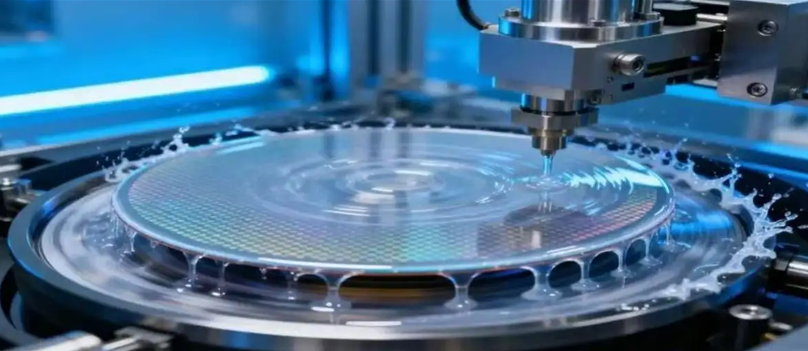
If you’re growing carbon nanotubes on silicon wafers, you know the struggle. You need a massive amount of thermal energy, and you need it concentrated exactly where it matters. The problem is that energy loves to escape. That’s why we stopped messing around with standard reflectors and switched to gold coatings. In this kind of setup, every single watt is precious.
Why gold?
Most people start with aluminum. It’s cheap, but it’s a sponge for infrared radiation—it absorbs way too much of the heat you’re trying to use. Gold is different. It’s incredibly good at bouncing infrared radiation right back toward the wafer. By using a high-purity gold coating, we can push more heat per square centimeter onto the surface. It’s a simple change, but it means you hit your synthesis temperatures faster. Plus, your power bill stays lower because you aren’t wasting energy heating up the walls of your machine.
The battle against “cold spots”
The real headache isn’t just getting the heat there—it’s making sure it’s even. If your reflector’s curve is off by even a couple of millimeters, you’re in trouble. You’ll end up with “cold spots” across the wafer, which means your CNT growth will be patchy and inconsistent. Think of it like creating a thermal cavity. The gold layer traps the photons, bouncing them back and forth between the heater and the substrate until the whole thing is screaming hot.
The trade-off (and the catch)
Here’s the thing: when you concentrate heat this aggressively, things get intense. It works great for the wafer, but it puts a lot of stress on your cooling manifolds. If you crank up the wattage without beefing up your heat sinks, you’re asking for trouble. You might warp the reflector housing or just fry your lamp sockets. You’ve got to make sure your cooling system can handle the heat that doesn’t make it into the wafer. We designed these to slide right into your existing CVD chambers. Just make sure your alignment is spot on. If the focus isn’t dead-center on the wafer, you’re just heating air.