
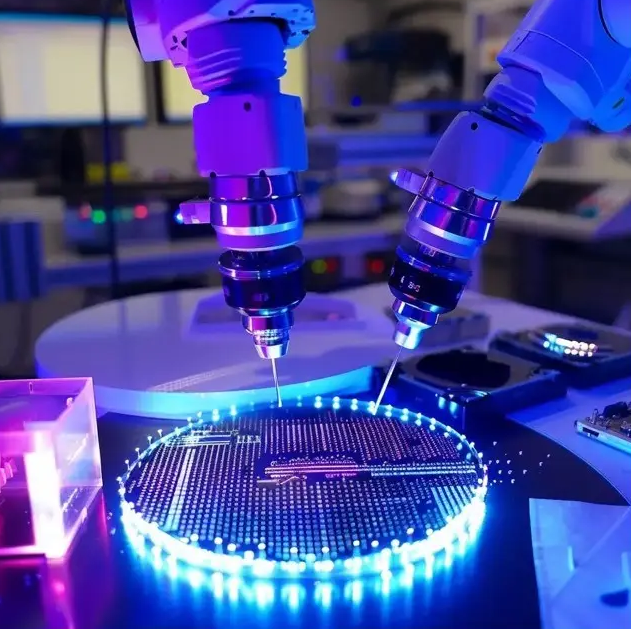
Stop Wasting Heat: The Magic of Gold-Coated Quartz
When you’re working in wafer fabrication, you quickly realize that getting heat onto a silicon surface is a bit of a battle. Here’s the problem: most standard lamps just blast energy in every direction. It’s a 360-degree spray. That means half your power is just heating up the machine’s chassis instead of the wafer. It’s a huge waste. To fix this, we use quartz shields with a gold coating. Why gold? It’s not just for looks. Gold is incredible at reflecting infrared light. By putting a thin layer of it on the back of the quartz, we essentially create a directional mirror. Instead of letting those photons wander off backward, the coating kicks them forward. It turns a scattered glow into a tight, focused beam. You get way more heat on the wafer without having to crank up the electricity bill. The materials matter We use quartz because it’s tough. It can take the hit of rapid heating and cooling cycles without cracking or giving up. As for the gold, we vacuum-deposit it. That’s just a fancy way of saying we bond it so tightly that it won’t peel or flake off when things get hot. It stays put. The trade-off Now, there is a catch. When you concentrate that much energy in one direction, your ramp-up times get much faster. That’s great, but it also puts a lot more stress on the wafer surface. If your PID controllers aren’t dialed in perfectly, you might overshoot your target temperature. You’ll also want to double-check that your cooling manifolds can handle the leftover heat that doesn’t hit the wafer. But once you have that dialed in? It’s a different world. You’ve turned a basic heating element into a precision tool. Your power draw drops, your cooling system doesn’t have to work nearly as hard, and your wafers come out consistent every single time.