
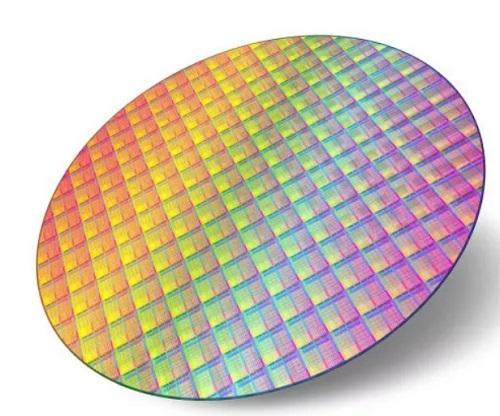
On the fab floor, temperature isn’t a comfort setting—it’s the process itself. A drift of even a few tenths of a degree across the wafer can throw off epitaxy thickness, shift doping profiles, and wipe out a whole run. The GaN MOCVD heater was built to take that uncertainty off the table. What matters under the hood It pairs a short-wave infrared (SWIR) halogen emitter with a quartz-based thermal stack that was engineered to respond fast and hold tight. You get wafer-level uniformity held to ±0.1°C across the susceptor, and setpoint repeatability within ±0.5°C from batch to batch. Temperature ramp rates top 20°C/s, so the chamber stabilizes quickly after loading without blowing your thermal budget. The unit is rated for Class 1–100 cleanroom operation, and the low-outgassing design keeps particle generation at zero once you’re in steady state. Power is configurable to 3-phase 400 VAC, and the interface supports standard MOCVD tool connectors, so it drops in without a redesign. Why it holds up in production In GaN epitaxy, the heater locks the reaction zone down fast, so growth recipes run the way they were written—every time. That same thermal discipline carries straight over to lithography support, where it matters for photoresist processing. Soft bake and hard bake profiles hit target temperature within seconds, which cuts down line-width variation and helps yield. You also save energy by holding setpoint without overshoot, and the reliability target is straight-up 24/7 operation—built to run without unplanned downtime. What you need to get right The heater performs best when the chamber geometry matches the specified standoff and gas flow pattern. Swap fixtures without re-qualifying the thermal profile, and uniformity will drift. Installation means matching the tool’s power and control bus, and we always recommend a short qualification run after commissioning to nail down the recipe envelope. Once you’re aligned, the process stays consistent—shift after shift.