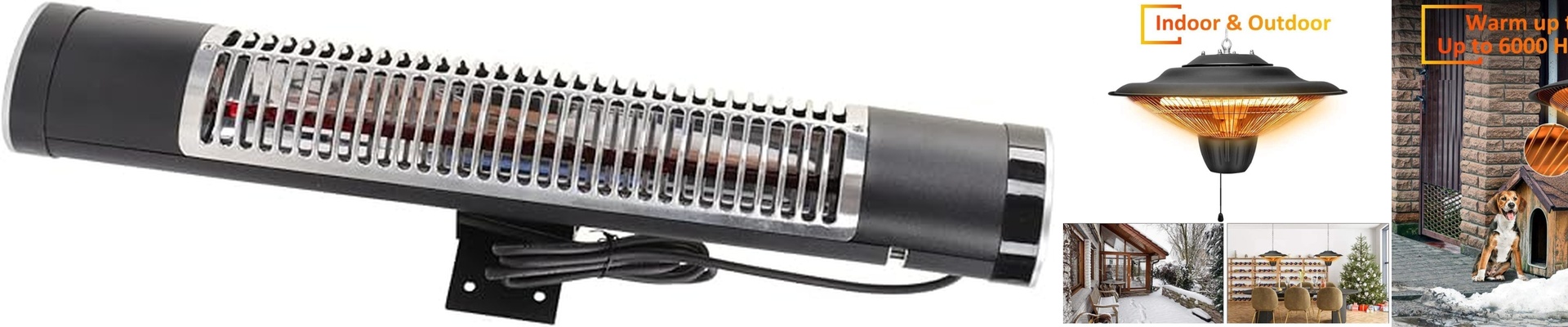
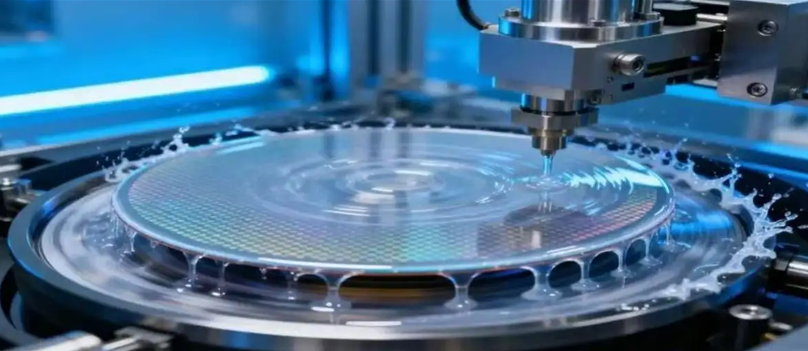
On the fab floor, a 1°C drift in the soft bake oven isn’t a footnote. It’s a yield hit. Wafer drying, photoresist pre-bake, and post-exposure cure all live on a tight thermal budget, and that’s exactly why we set up our fab heater line in China: to build short-wave IR heaters that were engineered for semiconductor process control, not for marketing sheets. What matters, technically Our IR modules deliver wafer-level thermal uniformity of ±0.1°C across the chuck, with setpoint repeatability within ±0.2°C. Fast ramp rates shorten the thermal profile, and zero particle generation keeps cleanroom particle counts stable in Class 1–100 environments. Quartz-halogen elements give stable spectral output so photoresist absorption stays consistent, and the heater body is compatible with vacuum and inert gas purge. We size power density to the substrate’s thermal mass, not the heater housing—so the process sees the temperature, not the tool. Why it works in practice In lithography cells, soft bake temperature directly sets photoresist viscosity and film thickness. Our IR approach locks that parameter in spec, which cuts CD variation and scum. For wafer drying after wet cleans, rapid, uniform heating prevents pattern collapse and watermarks without overshoot. And because IR heats the wafer directly instead of the chamber walls, energy draw drops. The units run 24/7 with low maintenance—field data show 5,000+ hours with less than 5% output drift. What you need to plan for These heaters need a dedicated, regulated power bus and precise emissivity calibration for each process layer. Dropping them into legacy ovens is straightforward, but any change in thermal mass may require a short tuning window to hit the exact bake curve. Before you move to pilot lots, schedule a 100-hour burn-in and baseline metrology.