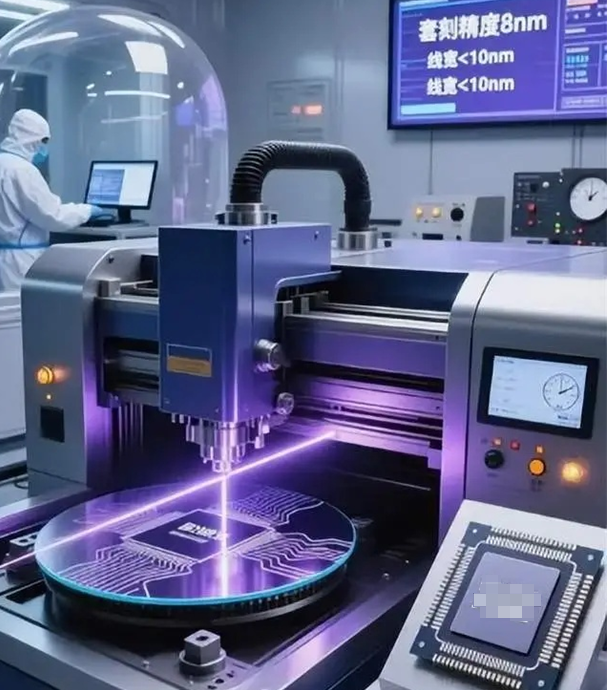
On the lithography floor, a half-degree drift in the soft bake is enough to move critical dimension by nanometers. That kind of drift turns into rework, scrap, and spec windows you miss. We built our photoresist baking lamps to keep thermal behavior predictable, shift after shift. What matters under the hood We run short-wave infrared (NIR) emitters, heating the resist directly and fast. Output stays stable from 50°C to 250°C. Across the wafer, uniformity lands within ±0.1°C, and repeatability within ±0.5°C from lot to lot. It holds cleanroom compatibility from Class 1 to Class 100, with fixtures and materials chosen for low outgassing and zero particle generation. Temperature is measured and logged in real time, so you can tie every run back to yield with traceable data. Why it holds up on the line The lamp covers the core thermal steps—wafer drying, photoresist soft bake, and hard bake/curing—without blowing the thermal budget. Ramp-up is quick, so cycle time drops without overshooting the resist glass transition. The narrow spectral response keeps substrate heating down, protecting the films underneath. The payoff is fewer defects, less scrap, and line-of-sight control over CD, profile, and residual solvent. Energy use falls because the heat goes into the resist, not into fixtures or the room. A few shop-floor realities NIR intensity drops with the square of distance, so the working gap has to be fixed and repeatable. Expect a short warm-up and calibration before each recipe. Make sure your chuck material and reflector geometry match the lamp’s thermal profile. Integration into existing tracks is straightforward, but plan the retrofit window for mechanical envelope and coolant lines.