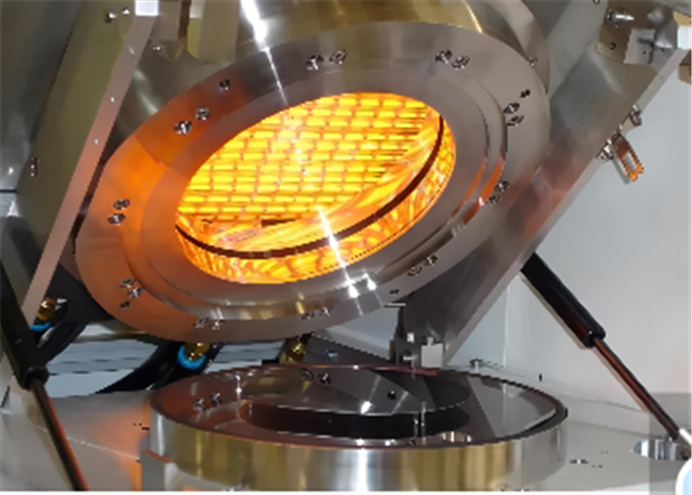
On the fab floor, a 1°C swing during photoresist bake isn’t a “small drift.” It shows up as linewidth spread, scumming, and scrap. IR heating can be precise, but only if the voltage feeding the IR source is stable enough to preserve the thermal budget. We built our fab IR voltage regulator to live with that constraint. What matters, technically We’re shooting for ±0.1°C effective temperature uniformity across the wafer by holding IR input power steady within tight tolerance, so line-induced fluctuations don’t modulate peak temperature. The regulator is cleanroom-compatible for Class 1–100, with materials and finishes that keep particle generation near zero. Soft bake and hard bake profiles stay repeatable because the controller compensates for voltage sag and surge before they even reach the emitter. You can run 24/7 with low thermal drift and long service intervals—units have hit 5,000+ hours with under 5% output drop. You run lithography cells where cycle time, yield, and cleanliness are non-negotiable. Stable IR power cuts rework from bake non-uniformity, shortens qualification, and helps you hold tighter critical dimensions. It also trims wasted energy by avoiding overshoot and cycling, and it simplifies maintenance by shielding IR emitters from voltage stress. Here are the practical details. Match the regulator to the IR emitter—short wave, medium wave, or carbon fiber—and confirm connector and mounting dimensions against your tool interface. Commissioning is quick: you tune the PID response to the thermal mass of your hot plate or IR oven. In high-humidity bays, plan for condensation control around the enclosure to keep long-term stability intact.