

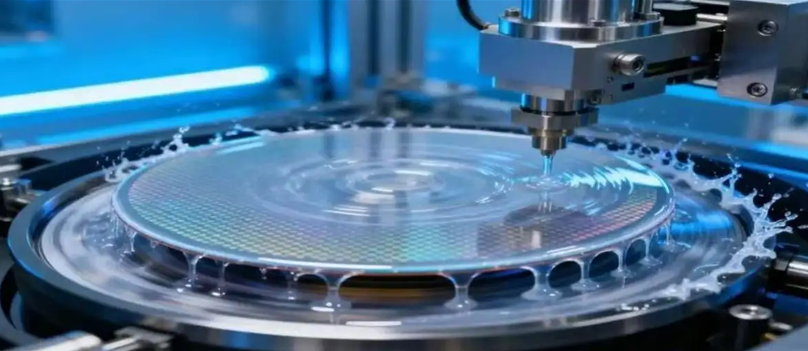
On the fab floor, the oven setpoint is just a number on a screen. The process is what the photoresist actually experiences, edge to edge, across the wafer. If thermal uniformity drifts, CD control goes sideways, and etch bias follows right along. What matters, technically We built this heating approach around wafer-level temperature control with ±0.1°C uniformity, so the soft bake and hard bake profiles hit the recipe—consistently, across the whole wafer. Short-wave and medium-wave infrared, delivered through quartz and carbon-fiber-reinforced elements, gives you fast, stable ramps without blowing your thermal budget. The system runs in cleanrooms Class 1–100, and the hot zone is laid out to keep particle generation down—exactly where lithography and track integration demand it. Repeatability is baked into the control loop: setpoints hold, and cycle-to-cycle variation stays tight. Why it holds up in lithography In lithography lines, that precision means the photoresist behaves predictably during soft bake and hard bake, so defects drop and yield on patterned wafers improves. The response is fast and controlled, so you can shorten the thermal soak without compromising profile integrity—handy when you’re running tighter pitches and thinner films. You also get lower energy use, thanks to efficient heating and fewer reworks. For uptime, the design leans on redundant monitoring and solid thermal mechanics, aiming to keep unplanned downtime off the board. What you need to plan for Integration comes down to matching the hot-zone interface to your track or stand-alone oven—connectors, exhaust, and utility alignment. Expect a commissioning window to dial in ramp rates and soak times for your specific photoresist stack. And the system needs stable voltage and clean cooling. If utilities in your area are variable, a dedicated line is the cleanest way to hold ±0.1°C day after day.